
2026 Best Trading Lapel Pins for Global Buyers?

Time:2026-10-20 Author:Charlotte
0%

As global events become more connected, Trading Lapel Pins are evolving beyond simple souvenirs. They now support brand recognition, cultural exchange, and memorable face-to-face conversations. A well-designed pin can travel from a trade show in Berlin to a collector’s board in Singapore. Its small size demands careful decisions about metal finish, enamel accuracy, fastening strength, packaging, and delivery reliability.

Industry data supports this practical value. The Advertising Specialty Institute’s 2023 Ad Impressions Study reported that promotional products can generate thousands of brand impressions during their usable life. It also indicated an average cost per impression of approximately half a cent across promotional items. These findings do not prove that every pin will perform equally. Design quality and audience relevance still matter. PPAI’s market research also shows the continuing scale of the promotional products sector in North America, where businesses invest heavily in physical items that remain visible after events end.

For global buyers, the best 2026 pins should combine collectible appeal with dependable production. Consider hard enamel for crisp logos, soft enamel for tactile detail, and die-cast metal for shaped designs. Ask suppliers for plating samples, color proofs, inspection photos, and documented lead times. Small mistakes can become expensive across thousands of units. A loose clutch, uneven border, or incorrect Pantone color may damage trust quickly. This guide examines leading options for international purchasing, while acknowledging an uncomfortable truth: the cheapest quotation is rarely the safest long-term choice.
2026 Best Trading Lapel Pins for Global Buyers?

What Trading Lapel Pins Are and How They Support Brand Recognition

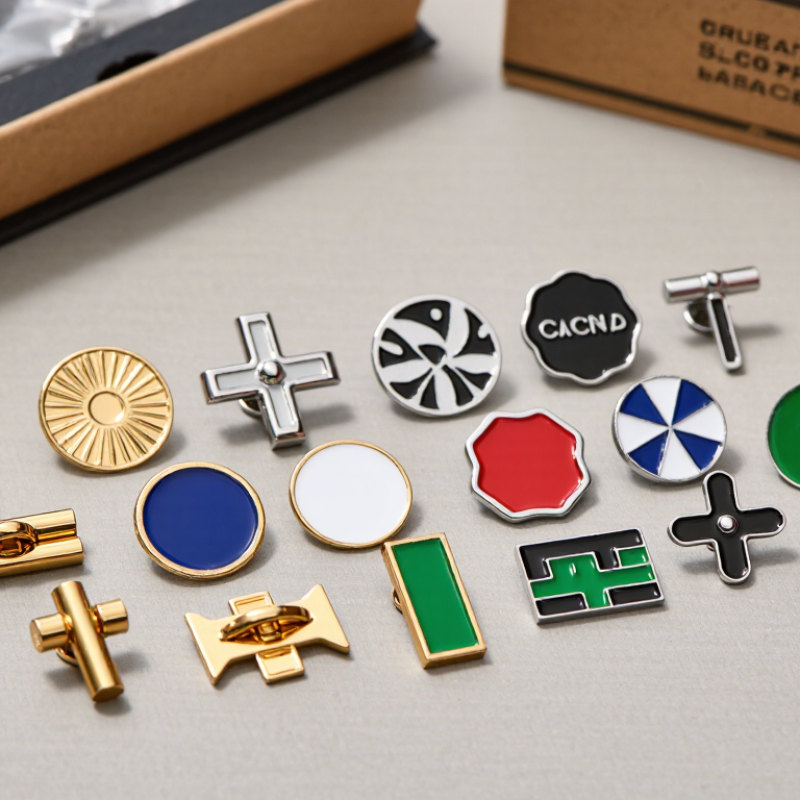
Trading lapel pins are small metal badges designed for exchange, collection, and everyday display. They often carry a logo, symbol, event mark, or regional design. For global buyers, these pins create a physical brand touchpoint that feels more personal than a digital advertisement. A visitor may notice a polished pin on a jacket months after an event. That repeated visibility supports brand recognition in offices, conferences, and travel settings.

Effective pins need more than an attractive image. Experienced buyers check metal quality, enamel consistency, clasp security, and color accuracy before placing larger orders. A raised edge can protect the artwork and improve readability at a short distance. Soft enamel offers texture, while hard enamel provides a smoother surface. Small text remains risky. It may look clear on a screen but disappear on a 25-millimeter pin. That is an easy mistake to underestimate.

Tips: Keep one strong symbol at the center. Use two or three clear colors. Request a physical sample before production. Check the backing, packaging, and shipping protection. Test the pin on fabric, not only on a product sheet. A slightly imperfect sample can reveal weak plating or loose hardware early. Leave space for cultural review, because colors and symbols may carry different meanings across markets.

Key Materials, Designs, Sizes, and Finishes for 2026

For global buyers, 2026 trading lapel pins need practical materials, clear designs, and consistent finishing. Zinc alloy remains popular because it supports detailed shapes and moderate production costs. Recycled metal can strengthen sustainability messaging, but suppliers should confirm its composition. Enamel adds color, while hard enamel creates a smooth, polished surface. Soft enamel offers visible borders and a textured feel. Neither option is perfect for every design.

Tips: Request a physical sample before bulk production. Check pin weight, clutch security, edge sharpness, color accuracy, and surface durability. Ask for material details and applicable safety documentation. A small sample can reveal expensive problems early. Remember packaging too. Individual bags prevent scratches, but they may increase plastic use.

Common trading sizes range from 20 to 35 millimeters. Smaller pins suit caps and narrow straps. Larger versions show maps, mascots, or fine lettering more clearly.

Gold, silver, black nickel, antique, and matte finishes create different moods. Glossy surfaces attract attention, yet they show fingerprints easily. Matte finishes look refined, but tiny scratches may appear sooner than expected.

Buyers should match the finish with the product’s daily use, not only the promotional artwork. A thoughtful design may still fail if the clasp feels weak or the back card bends during shipping. That detail is easy to overlook.

How to Compare Trading Lapel Pin Quality and Manufacturing Standards

When comparing trading lapel pins, inspect more than artwork and price. The PPAI 2024 market report valued North American promotional products sales at about $26.6 billion in 2023. That scale increases pressure on suppliers to deliver consistent quality.

Ask for a physical sample. Check the pin’s weight, edge smoothness, plating uniformity, and clutch strength. A sharp edge can damage clothing. Uneven enamel may reveal poor filling control. ISO’s 2023 Survey records more than one million ISO 9001 certificates worldwide, but certification alone does not guarantee excellent pins. Request production records, material specifications, and inspection results. ISO 2859-1 sampling plans can support batch acceptance. For metal corrosion, suppliers may provide salt-spray test data based on ASTM B117. These tests help, although they cannot replace hands-on inspection.

Tips: Compare identical samples under bright light. Measure thickness with a caliper. Rub the surface gently with a cotton cloth. Ask whether recycled metal changes the finish. Confirm lead and nickel limits through laboratory reports where required. Also check packaging, carton strength, and color consistency across repeated orders. I have seen attractive samples fail during larger production runs. A second inspection is worth the delay. Some buyers overlook the backing mechanism. That small part often decides whether the pin stays secure.

Global Buyer Guide to Suppliers, Pricing, Shipping, and Custom Orders

2026 Best Trading Lapel Pins for Global Buyers?

Global buyers should compare more than unit price. PPAI’s 2024 sales report estimated North American promotional product sales at about $26.6 billion. That figure shows strong demand, but it does not guarantee pin quality. Ask suppliers for metal samples, plating options, mold fees, minimum order quantities, and production photos. A practical specification should state size, thickness, attachment type, color references, and packaging details. Soft enamel usually reduces cost, while hard enamel offers a smoother surface. The choice depends on purpose.

Landed cost matters more than the factory quotation. Request prices under clear shipping terms, such as FOB or DDP, and separate freight, taxes, inspection, and customs charges. UNCTAD’s Review of Maritime Transport 2024 reports that shipping carries over 80% of global merchandise trade by volume. Delays still happen. Build buffer time. For urgent orders, compare air freight with consolidated shipping, then confirm carton dimensions and tracking procedures. Suppliers should provide material declarations and coating information where required. A digital proof can look excellent, yet the finished pin may feel thin or uneven. This remains a common sourcing weakness. Buyers should inspect a pre-production sample, although samples add time and sometimes unnecessary cost. Custom orders also need a written approval process for artwork, color tolerances, defects, replacements, and payment stages. Never rely on a friendly message alone. A clear record protects both sides.

2026 Best Trading Lapel Pins: Custom Order Pricing Guide

Indicative supplier planning benchmarks for standard custom enamel lapel pins. Larger orders generally reduce the unit price because setup and production costs are distributed across more pieces. Prices exclude artwork, tooling, packaging, taxes, and international shipping.

Compliance, Sustainability, and Trends Shaping Trading Lapel Pins in 2026

In 2026, trading lapel pins must prove more than visual appeal. Buyers increasingly request material declarations, supplier records, and testing evidence. ASI’s Ad Impressions Study reports that 85% of consumers remember an advertiser from a promotional product. That makes trust important. A bright enamel pin still needs a reliable paper trail.

Compliance begins with nickel release, coatings, packaging, and traceability. EN 1811 testing can help assess nickel exposure for pins worn against skin. ISO 14021 also requires evidence behind self-declared environmental claims. Recycled metal sounds useful, but sellers should show the percentage and source. Vague green wording creates risk. Small details matter.

Sustainability is becoming tactile. Buyers are choosing recycled alloys, solvent-conscious finishes, plastic-free cards, and smaller packaging. The 2024 Global Consumer Insights Pulse Survey by PwC found that 46% of consumers say they are buying more sustainable products to reduce environmental impact. Yet sustainability claims remain difficult to verify. I have seen attractive specifications hide unclear supply chains. That weakness deserves review. QR-linked material records, batch numbers, and consistent supplier audits can make global purchasing more dependable. Trends may change quickly. Evidence should not.

2026 Best Trading Lapel Pins for Global Buyers? — Compliance, Sustainability, and Trends Shaping Trading Lapel Pins in 2026

Buying Dimension 2026 Practical Benchmark or Market Signal Compliance Relevance Sustainability Consideration Recommended Buyer Action
Base Metal Common trading-pin bases include iron, steel, brass, zinc alloy, and aluminum. Selection should be based on weight, corrosion resistance, detail requirements, and destination-market restrictions. Verify Request material declarations and test documentation for restricted substances where the destination market requires them. Prioritize durable metals with documented recycled content or established recycling routes. Avoid unsupported “eco” claims based only on the metal name. Specify the exact alloy, plating, coating, and backing material in the purchase specification.
Nickel Release Nickel exposure is especially relevant for metal surfaces and pin backs that may touch skin. EU REACH limits nickel release to 0.5 μg/cm²/week for prolonged skin contact and 0.2 μg/cm²/week for items inserted into pierced skin. High priority Use laboratory testing appropriate to the intended use and destination market; “nickel-free” should not be used without evidence. Long-lasting plating and corrosion resistance can reduce replacement rates, but coatings must be tested for durability and chemical safety. Include nickel-release testing, coating durability, and batch traceability in the supplier documentation package.
Lead, Cadmium, and Restricted Chemicals Paints, pigments, plating layers, solder, and metal alloys can introduce restricted substances. Risk varies by material, coating process, and jurisdiction. High priority Use risk-based chemical testing and maintain supplier declarations for the applicable destination countries. Water-based or lower-impact coatings may reduce certain process impacts, but environmental claims require substantiation and should not replace chemical-safety testing. Ask for a current test report covering the finished pin, not only an uncoated base-metal sample.
EU Product Safety and Traceability The EU General Product Safety Regulation has applied since 13 December 2024 and strengthens product-safety, traceability, and online-sales obligations for covered consumer products. Required where applicable Product identification, responsible economic-operator information, safety information, and technical documentation may be needed depending on the product and sales channel. Traceable materials and documented production controls support both compliance and responsible sourcing. Prepare a product file containing specifications, risk assessment, test evidence, supplier details, and packaging information.
Children’s Product Risk A lapel pin marketed or packaged for children may be assessed differently from an adult promotional accessory because of small parts, sharp points, detachable backs, and foreseeable misuse. High priority Avoid relying on an adult-use label if the design, imagery, packaging, or distribution indicates children may use the item. Use robust construction and minimize unnecessary components to reduce breakage, waste, and safety risk. Define the intended age group before design approval and complete the required market-specific testing.
Enamel and Color Finish Soft enamel is commonly selected for recessed color and lower-cost detail; hard enamel provides a smooth, polished surface; printed finishes suit gradients and highly detailed artwork but may show wear sooner. Colorants, coatings, and protective finishes should be included in chemical and durability assessments when required. Choose the finish that meets the intended service life. A longer-lasting surface can reduce replacement and disposal frequency. Approve a physical color sample and define acceptable limits for color variation, scratches, bubbles, and surface pinholes.
Attachment and Sharp-Edge Safety Butterfly clutches, rubber backs, locking backs, magnets, and safety-pin mechanisms provide different levels of retention and handling risk. Assess Check for accessible sharp points, detachable small parts, magnet hazards, and secure attachment under foreseeable use. Reusable or replaceable backings may extend product life and reduce complete-unit replacement. Conduct pull, twist, edge, and drop checks on finished samples, including the backing and packaging configuration.
Recycled Content Claims Recycled metal and recycled packaging are increasingly requested by buyers, but recycled-content percentages differ by material, supplier, and production batch. Environmental claims should be specific, accurate, and supported by supplier records or chain-of-custody evidence where applicable. Strong signal Prefer documented post-consumer or pre-consumer content over vague claims such as “green metal” or “eco alloy.” State the material, recycled-content percentage, calculation method, and verification document in the specification.
Packaging and Extended Producer Responsibility Paper cards, paperboard sleeves, reusable pouches, and minimal packaging are common lower-waste options. Packaging obligations can differ by country and sales model. Check destination rules Packaging labeling, material identification, and producer-responsibility requirements vary across markets. Reduce empty space, avoid unnecessary plastic laminates, and design packaging for easy material separation and recycling. Map packaging materials to each destination market before finalizing artwork and carton quantities.
Supplier Transparency Global buyers increasingly request factory location, subcontractor disclosure, material origin, test reports, corrective-action records, and production-batch identification. Increasing importance Documentation supports due diligence, recalls, customs questions, and marketplace compliance reviews. Traceability makes claims about recycled content, responsible sourcing, and waste reduction more credible. Use a supplier questionnaire and require document renewal when materials, plating, factory, or production process changes.
Quality-Control Tolerances Recommended purchase specifications should define artwork alignment, plating color, enamel fill, surface defects, pin-back position, and attachment strength rather than relying on visual approval alone. Consistent quality lowers the risk of unsafe edges, loose components, and nonconforming batches reaching consumers. Clear acceptance criteria reduce rejected production, rework, and avoidable shipment waste. Use an approved golden sample, pre-shipment inspection, and a written defect classification system.
Customization and Design Trend 2026 demand is expected to favor compact designs with strong silhouettes, limited color palettes, mixed textures, transparent or translucent effects, and collectible series formats. Complexity should not compromise edge safety, attachment strength, chemical compliance, or accurate product descriptions. Efficient artwork with fewer separate components can reduce material use and simplify recycling. Balance visual novelty with manufacturability, durability, and a clear compliance review before mass production.
Order Planning and Lead Time Custom projects commonly require separate time for artwork approval, sampling, testing, production, inspection, and international freight. Actual timing depends on quantity, finish, season, and destination. Allow time for laboratory testing and corrective action instead of treating compliance review as a final shipping step. Consolidated shipments and accurate demand planning can reduce expedited freight and excess inventory. Build a written timeline with approval gates and a contingency period before the required in-market date.
Best Overall 2026 Selection Criteria A competitive trading lapel pin should combine safe materials, secure attachment, durable finishing, clear traceability, restrained packaging, and design flexibility. Best practice Compliance is destination-specific; no single test or label guarantees access to every global market. Documented durability and verifiable material claims are more reliable than broad sustainability language. Score suppliers on safety evidence, traceability, quality consistency, sustainability documentation, communication, and total landed cost.

Note: Regulatory requirements depend on the product’s intended use, claims, materials, packaging, sales channel, and destination country. Buyers should obtain current legal and laboratory advice before placing a commercial order.

FAQS

What are trading lapel pins?

Trading lapel pins are small metal badges made for exchange, collection, or daily display. They may show symbols, event marks, or regional artwork.

How can lapel pins support brand recognition?

A pin creates a physical reminder beyond digital advertising. Someone may notice it on a jacket months after a conference.

What design works best on a small pin?

Use one strong central symbol and two or three clear colors. Small text can disappear on a 25-millimeter surface.

Which finish should buyers choose?

Soft enamel adds visible texture. Hard enamel creates a smoother surface. The better choice depends on the design and intended feel.

What should buyers inspect before ordering many pins?

Check metal quality, color accuracy, enamel consistency, clasp security, packaging, and shipping protection. Request a physical sample.

Why should the sample be tested on fabric?

A product sheet cannot reveal every weakness. Fabric testing may expose a loose clasp, rough edge, or poor balance.

What evidence supports responsible material claims?

Ask for material percentages, source details, supplier records, and testing documents. Vague environmental wording is not enough.

How can packaging become more sustainable?

Consider recycled metal, plastic-free cards, solvent-conscious finishes, and smaller packaging. These choices still need reliable evidence.

Why do cultural checks matter for pin designs?

Colors and symbols can carry different meanings across markets. A design may look attractive but create confusion elsewhere.

What can make international purchasing more dependable?

Use batch numbers, material records, and regular supplier reviews. Trends change quickly. Evidence should remain clear.

Conclusion

Trading Lapel Pins are compact, versatile promotional products that help organizations strengthen brand recognition, celebrate partnerships, and create memorable symbols for events, teams, and global campaigns. In 2026, buyers can choose from materials such as enamel, metal, recycled alloys, and durable mixed components, with designs ranging from minimalist logos to detailed collectible artwork. Popular sizes, polished or matte finishes, color techniques, and attachment options should be selected according to the intended audience, usage environment, and visual identity.

For global buyers, evaluating supplier quality means reviewing material consistency, color accuracy, mold precision, plating durability, production controls, and sample approval procedures. Important purchasing considerations also include transparent pricing, minimum order quantities, customization capabilities, packaging, shipping schedules, and communication across time zones. Responsible sourcing is increasingly important, making compliance documentation, safer materials, recyclable packaging, and ethical manufacturing valuable priorities. Emerging trends include sustainable finishes, interactive designs, limited editions, and technology-enhanced pins that offer stronger engagement while maintaining practical durability and visual appeal.

Charlotte

Charlotte

Charlotte is a seasoned marketing professional with a deep understanding of the company's portfolio and a passion for elevating its presence in the market. With a keen eye for detail and a commitment to excellence, she ensures that our professional blog is regularly updated with insightful articles......