A Baseball Lapel Pin is a small product with unusual promotional strength. It can turn a team emblem, tournament date, or baseball heritage into a lasting keepsake. The 2023 ASI Ad Impressions Study reports that promotional products can generate thousands of lifetime impressions, while maintaining a comparatively low cost per impression. That finding supports careful pin design, not careless mass production.
Dale Denham, president of PPAI, has stated, “Promotional products are the only advertising medium people thank you for.” A well-made Baseball Lapel Pin can create that response through clear artwork, balanced proportions, and comfortable wear. Zinc alloy provides a solid base. Hard enamel creates clean color fields. A butterfly clutch or rubber backing improves everyday use. These details matter.
Not every pin becomes collectible. A polished surface cannot rescue weak artwork. Buyers should review Pantone matching, mold samples, plating quality, edge sharpness, and attachment strength before approving production. Small defects become obvious on a 25-millimeter badge. This is where an experienced manufacturer and supplier should provide practical inspection records, sample approval, and consistent batch control.
The promotional products market continues to value useful, durable items rather than disposable giveaways. Baseball organizations can apply that principle to fan merchandise, player awards, community events, and corporate partnerships. However, demand estimates for the specific Baseball Lapel Pin segment remain limited, so suppliers should avoid inflated market claims. Reliable sourcing depends on transparent specifications, realistic lead times, and documented quality checks. Good pins are memorable. Great pins survive the season.
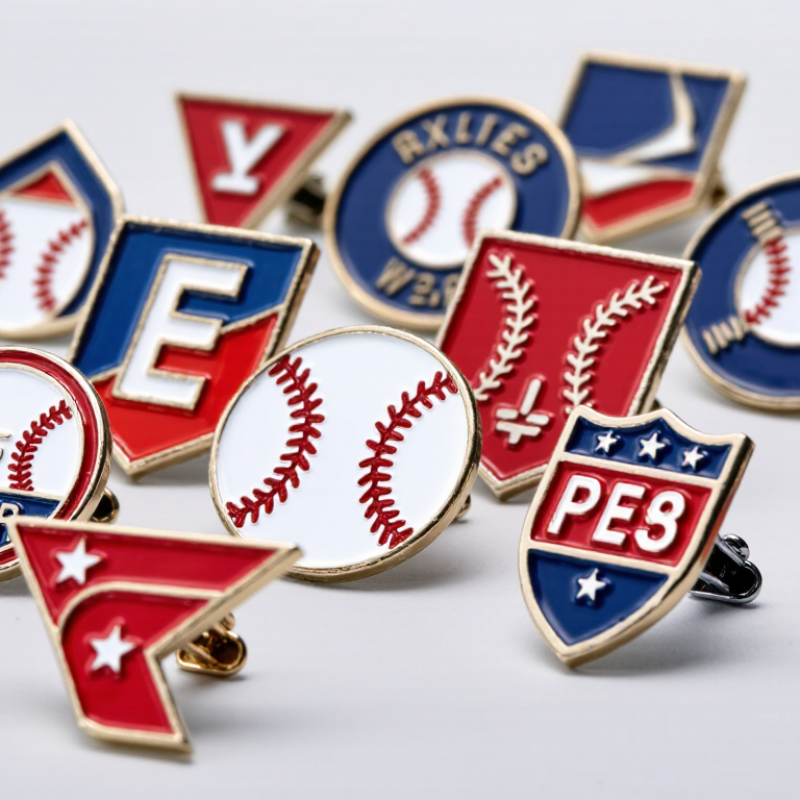
China’s Baseball Lapel Pin Manufacturing Industry
China’s Baseball Lapel Pin Manufacturing Industry
China’s baseball lapel pin manufacturing industry serves clubs, tournaments, schools, and collector programs worldwide. The World Baseball Softball Confederation reports that baseball and softball reach more than 65 million participants across over 140 countries and territories. This wide participation supports steady demand for small, affordable sports merchandise.
Production usually begins with artwork review and a custom mold. Manufacturers then select die-struck metal, soft enamel, hard enamel, or printed finishes. A reliable supplier checks line thickness, plating color, clasp strength, and surface scratches. Each pin should feel balanced in the hand, with clean edges around the bat, glove, or ball details. Small flaws still happen. Better factories record them instead of hiding them.
PPAI Research reported that the global promotional products market remained worth tens of billions of dollars in recent industry studies. Baseball pins benefit from this broader demand for compact, wearable identity products. China’s established metalworking and packaging supply chains can support flexible order sizes and export preparation. However, low prices alone do not prove expertise. Buyers should request a physical sample, confirm material specifications, and review production photos before approval. A thoughtful factory also checks color consistency under different lighting. That step is often missed.
Common Baseball Lapel Pin Size Options in China Manufacturing
Standard diameter choices used for custom baseball-themed lapel pins
Baseball lapel pins are commonly produced in compact metal badge sizes ranging from approximately 20 mm to 45 mm in diameter. Smaller sizes are suitable for uniforms and promotional use, while larger sizes provide more space for detailed baseball artwork, text, and color separation.
Types and Customization Options for Baseball Lapel Pins
Baseball lapel pins turn team identity into a small, wearable detail.
Common types include hard enamel, soft enamel, die-struck, printed, and 3D relief pins. Hard enamel gives a smooth, polished surface. Soft enamel leaves recessed lines for a textured feel. Die-struck designs highlight metal shapes, such as crossed bats or stitched baseballs. Printed pins suit gradients, player numbers, and fine illustrations. Each type creates a different visual and tactile result.
Customization begins with the artwork, but practical choices matter just as much.
Select pin size, metal plating, color count, and attachment style together. Gold, silver, black, or antique plating changes the design’s character. Rubber backs feel comfortable, while butterfly clutches offer familiar security. For caps, jackets, and bags, a 20–30 mm size often balances visibility and weight. Larger pins can show detail, yet they may feel heavy during long wear.
A dependable China-based manufacturer and supplier checks lines, edges, plating, enamel fill, and attachment strength before shipment.
Sample approval should come before mass production. This catches thin bat handles, crowded lettering, or colors that appear darker than expected. Small mistakes matter. Not every attractive sketch becomes a strong pin. Fine details sometimes need simplification. Clear drawings, Pantone references, and honest production feedback help create a more reliable result.
Baseball Lapel Pin Design and Production Process
China Top Baseball Lapel Pin Manufacturer and Supplier
Baseball lapel pin design starts with a clear visual idea. A curved ball, stitched seam, or crossed bat can create strong recognition. However, small details often disappear after reduction. Our designers check the artwork at its actual pin size. They adjust line thickness, spacing, and color blocks before making a sample. A clean silhouette usually works better than crowded decoration. Simple shapes matter.
Production begins with digital proofing and mold preparation. The mold defines the outline, recessed areas, and raised metal details. Zinc alloy suits shaped designs, while iron offers a firm and economical structure. After casting or stamping, each piece is polished and checked for sharp edges. Enamel filling requires steady color placement. Minor surface differences can still occur. They need careful inspection.
Plating changes the final character of a baseball pin. Gold, silver, black, and antique finishes create different visual effects. The backing should also match the intended use, whether for uniforms, collections, or event exchanges. We compare samples under natural and indoor light. A color that looks balanced on screen may appear too dark in metal. This is why revisions remain necessary. Reliable suppliers record dimensions, plating choices, enamel colors, and inspection results for every order. That documentation supports consistent production, although no handmade finishing process is perfectly identical.
Quality Standards and Supplier Selection Criteria
For a China-based baseball lapel pin manufacturer, quality begins with measurable controls, not attractive photos. The ISO Survey 2022 reported 1,265,216 ISO 9001 certificates across 188 countries and economies. Certification helps, but it does not prove every production line performs consistently. Request the certificate scope, recent audit date, and corrective-action records. A reliable supplier should also provide approved samples, material declarations, and batch traceability.
Inspect the details that buyers often overlook. Check enamel filling under bright light, edge smoothness, clasp strength, and plating consistency. For metal safety, ask for nickel-release testing when products may contact skin. Use ISO 2859-1 sampling plans for quantity inspections. Test corrosion resistance when the pin may face humidity or frequent handling. Packaging matters too. Each pin should sit securely, without loose backs scratching nearby pieces. Factory experience helps here, although experience alone can hide weak documentation.
Tips: Ask for three production samples, not one. Compare color, weight, and clasp tension. Request laboratory reports with sample numbers and test dates. Confirm whether inspections occur before packing. I would not rely on a perfect sample alone. Real batches can vary. A small pilot order can expose that weakness before a larger purchase. Keep written approval records for artwork, dimensions, metal finish, and packaging. Clear records reduce arguments later.
Applications, Packaging, and Wholesale Services
China Top Baseball Lapel Pin Manufacturer and Supplier
Applications, Packaging, and Wholesale Services
Baseball lapel pins support team recognition, tournament gifts, fan collections, and club fundraising. The Sports & Fitness Industry Association reported 16.7 million U.S. baseball participants in 2023. That audience creates steady demand for practical, memorable accessories. Enamel, soft PVC, and die-struck pins suit different budgets and visual styles. We recommend testing logo size, metal finish, and clasp strength before production. Small details matter.
Packaging protects the pin and shapes the buyer’s first impression. Backing cards work well for retail displays and event handouts. Individual bags reduce scratches during shipment. Recycled paper sleeves can support sustainability goals, though they may need stronger moisture protection. Smithers estimated the global packaging market at about 1.17 trillion dollars in 2023, with continued growth expected through 2028. Packaging is not decoration alone. It affects damage rates, storage, and shipping cost.
Tips: Request a pre-production sample. Check color accuracy under natural light. Confirm pin dimensions, card artwork, carton quantity, and barcode space. For wholesale orders, compare mixed-design minimum quantities, sample fees, production schedules, and inspection procedures. A reliable supplier should provide clear proofs and measurable quality standards. We have seen rushed approvals cause avoidable errors. That lesson remains easy to forget. Bulk buyers may also request customized cards, individual packing, and export cartons. These services simplify distribution, but only when specifications are written clearly.
FAQS
They support team recognition, tournament gifts, school events, fan collections, and club fundraising. Small items can carry strong memories.
Common choices include die-struck metal, soft enamel, hard enamel, printed surfaces, and soft PVC. Each creates a different texture and price.
Production begins with artwork review and mold creation. The factory then confirms dimensions, colors, metal, plating, and clasp style.
Check enamel filling, smooth edges, plating consistency, clasp tension, scratches, and overall balance. Inspect the small parts carefully.
No. A certificate supports credibility, but it cannot prove every batch is consistent. Recent audits and production records matter too.
Yes. Request several samples when possible. Compare color, weight, clasp strength, and surface finish under bright and natural light.
Start with a small pilot order and use written approvals. Record artwork, dimensions, finishes, packaging, and inspection requirements.
Backing cards suit retail displays and event handouts. Individual bags help prevent scratches. Paper sleeves look practical but may need moisture protection.
Confirm minimum quantities, mixed designs, sample fees, production timing, carton quantities, barcode space, and inspection procedures. Rushed approval creates avoidable mistakes.
Reliable factories record defects instead of hiding them. Buyers should review corrective actions, batch records, and replacement terms. Perfect samples can mislead.
Conclusion
China’s baseball lapel pin manufacturing industry offers flexible solutions for teams, events, collectors, retailers, and promotional campaigns. A Baseball Lapel Pin can be produced in various shapes, sizes, finishes, and attachment styles, with customization options including enamel colors, engraved details, raised or recessed designs, and personalized logos or text. Manufacturers typically support both small custom orders and large wholesale production, helping customers match their preferred style and budget.
The design and production process generally includes artwork confirmation, mold preparation, metal forming, surface finishing, coloring, polishing, inspection, and final assembly. When selecting a supplier, buyers should consider material quality, color consistency, production accuracy, communication, lead times, and quality control procedures. Reliable suppliers can also provide protective packaging, customized packing solutions, sample approval, and efficient wholesale services, ensuring that each Baseball Lapel Pin is delivered in good condition and meets the intended design and application requirements.