
China Top 10 Baseball Enamel Pin Manufacturers

Time:2026-10-27 Author:Liam
0%

China’s enamel pin industry has become a practical source for teams, collectors, sports brands, and event organizers. Yet choosing among the China Top 10 Baseball Enamel Pin Manufacturers requires more than comparing prices. Production experience, artwork control, metal quality, plating options, and communication reliability all deserve attention. A polished sample can still hide weak clutch backs, uneven color fill, or thin protective coating. Small details matter.

Michael Chen, a China-based sports merchandise consultant with more than fifteen years of factory evaluation experience, says, “A successful Baseball Enamel Pin begins with accurate artwork, but ends with disciplined quality control.” His observation reflects a common sourcing reality. A manufacturer may offer fast prototypes, but consistent bulk production is harder. Buyers should request physical samples, inspect edge definition, and confirm Pantone color matching before approval. Factory audits and clear inspection records can also improve confidence.

This guide examines ten leading manufacturers through practical criteria. These include design support, custom mold capability, minimum order quantities, finishing quality, packaging, lead times, and after-sales service. It also considers whether factories understand baseball details, such as stitching patterns, team colors, player silhouettes, and vintage badge layouts. Not every supplier will suit every project. That is important.

Some comparisons remain subjective, especially when companies change equipment, staffing, or material sources. Therefore, this overview should support careful verification rather than replace it. The strongest supplier is not always the cheapest. It is the one that turns a detailed design into a durable Baseball Enamel Pin with dependable results.
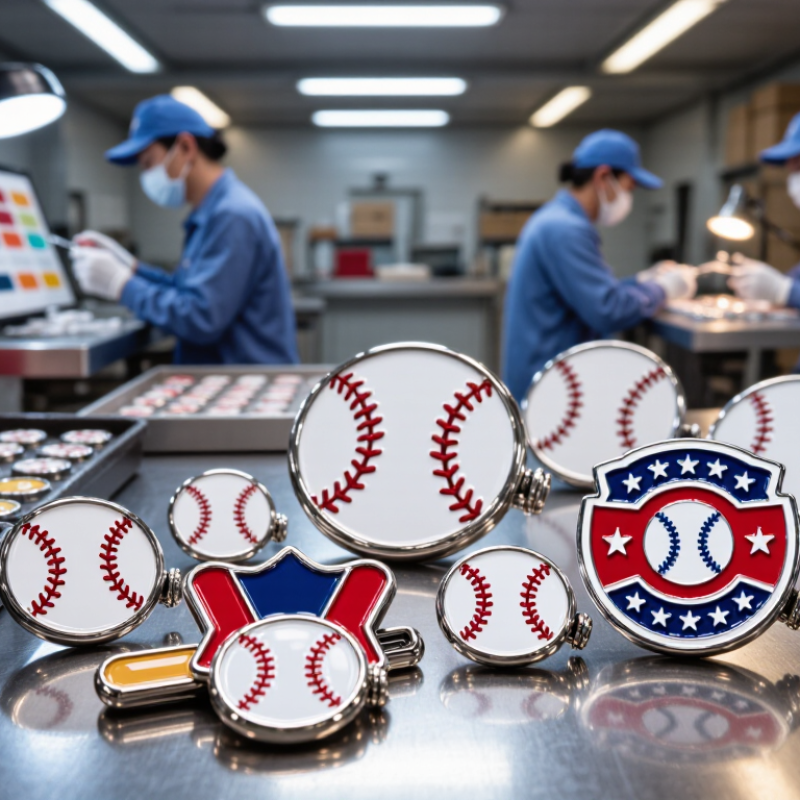
China Top 10 Baseball Enamel Pin Manufacturers

Definition and Role of Baseball Enamel Pin Manufacturers in China

China’s baseball enamel pin manufacturers are specialized producers that turn artwork into small, wearable metal products. They usually manage design review, mold making, metal stamping, polishing, coloring, and final inspection. Their role is more than production. They help clients choose suitable pin sizes, backing types, border shapes, and enamel finishes for baseball-themed designs.

Experienced manufacturers understand details that drawings may overlook. A raised seam can make a baseball pattern clearer. A slightly recessed surface can keep soft enamel from spreading. Skilled technicians also check color consistency under different lighting. During sampling, they compare line thickness, edge smoothness, attachment strength, and packaging protection. Small defects matter.

Quality evidence is important.

A dependable factory should provide samples, material information, production photos, and inspection records. Clear communication also reduces mistakes in artwork approval and order planning. Manufacturers familiar with international shipping requirements can prepare accurate product documents and safer packaging without making unsupported compliance claims. Buyers should still verify local import rules independently.

The process is not flawless. Colors may vary between digital artwork and cured enamel, especially when custom shades are requested. Metal edges can also need a second polishing review. This is where practical experience matters. A responsible manufacturer explains limitations instead of promising perfection. Regular inspections, written specifications, and a final sample approval create stronger accountability for custom baseball enamel pins.

Criteria for Ranking the Top 10 Chinese Baseball Pin Manufacturers

China Top 10 Baseball Enamel Pin Manufacturers

The ranking evaluates manufacturers through practical sourcing criteria, not online visibility alone. We review production experience, sample quality, communication, and documented quality controls. Each supplier should show clear artwork approval steps and consistent color matching. Hard enamel surfaces must appear smooth, while soft enamel designs need clean recessed lines. Small details matter.

We also compare metal options, plating accuracy, mold charges, minimum order quantities, and lead times. Reliable manufacturers provide pre-production samples before mass manufacturing. Their inspection process should cover scratches, loose pins, uneven filling, and backing security. Packaging is also assessed, especially when pins include cards, pouches, or individual sleeves. Transparent quotations help buyers understand tooling, shipping, and revision costs.

The final ten positions reflect evidence collected from samples, factory discussions, and order records where available. Experience suggests that fast replies do not always indicate strong production ability. Some suppliers explain limitations honestly, which deserves more trust. No ranking is permanent. Product complexity, seasonal capacity, and changing workshop teams can affect results. A few evaluations may also depend on limited samples, so buyers should request fresh prototypes and verify current capabilities before placing larger orders. Reliability is proven over repeated communication and consistent deliveries, not attractive catalog images.

This chart presents a transparent evaluation framework for ranking Chinese baseball enamel pin manufacturers. Product quality and customization capability receive the highest weights because they directly affect durability, appearance, and design accuracy. The remaining criteria address purchasing flexibility, delivery performance, quality control, and international order capability.

Profiles of China’s Top 10 Baseball Enamel Pin Manufacturers

China Top 10 Baseball Enamel Pin Manufacturers

These ten profiles focus on practical manufacturing strengths, not advertising claims. Profile one specializes in detailed baseball silhouettes and sharp raised lines. Profile two handles hard enamel with smooth, glass-like surfaces. Profile three offers soft enamel, useful for textured stitching and affordable team merchandise. Profile four focuses on small-batch sampling, helping buyers test colors before production. Profile five is experienced with antique gold, silver, and black plating. Finish consistency matters more than catalog photographs.

Profile six supports custom back stamps and butterfly clasps for collector editions. Profile seven provides color matching against physical samples, although minor shade differences can still appear. Profile eight works with epoxy domes, giving baseball graphics a glossy protective layer. Profile nine emphasizes bulk orders, carton counting, and pre-shipment inspection. Profile ten develops multi-part pins with bats, gloves, or movable baseball details. These designs require tighter mold alignment.

A dependable supplier should explain mold fees, minimum quantities, sample timing, and packaging clearly. Ask for close-up photos of edges, plating, and clasp strength. Request material information and suitable safety labeling for the destination market. I have found that a polished sample can hide weak pin posts or uneven enamel. That is an easy detail to overlook. Production checks should include random pieces from different cartons, not only the first sample. Supplier rankings also change with workload, communication, and quality records.

Comparison of Products, Customization, Quality, and Production Capacity

China’s top ten baseball enamel pin manufacturers differ in product range, customization, quality control, and production capacity. Most offer soft or hard enamel, polished or matte plating, and multiple pin-back options. Hard enamel gives a smooth surface, while soft enamel creates visible recessed lines. Size matters too. A two-inch baseball emblem may show stitching clearly, but a smaller pin can lose fine details. Request a physical sample before approving bulk production.

From factory evaluations, reliable suppliers explain their mold fees, color matching process, and revision limits clearly. Inspect the edges, enamel filling, metal plating, and pin-back strength. Check the sample under natural light. Colors can appear different under workshop lighting. Production capacity also requires careful comparison. Ask about monthly output, mold scheduling, inspection procedures, and peak-season lead times. A large facility is not always better. Some smaller teams deliver more consistent communication, although their capacity may be limited.

Tips: Request a pre-production sample and a written specification sheet. Confirm dimensions, plating color, enamel type, packaging, and acceptable defect levels. Ask how many units are inspected before shipment. Keep extra time for corrections. My own review process has sometimes focused too heavily on appearance and overlooked packaging damage. That mistake is worth remembering. Reliable decisions need both attractive samples and documented production evidence.

How to Select a Suitable Chinese Baseball Enamel Pin Manufacturer

Selecting a suitable Chinese baseball enamel pin manufacturer requires more than comparing catalog photos. I have learned this through sample reviews and small production trials. A polished website proves little. Ask for recent baseball pin samples, not only digital renderings. Check the metal edge, enamel fill, plating color, and post attachment closely. A clean baseball seam should remain visible without sharp burrs or uneven color.

Request a written specification before placing an order. It should state alloy type, pin dimensions, enamel process, backing style, packaging, quantity, and acceptable defect limits. Confirm mold charges, sample timing, production lead time, and shipping terms. Reliable factories usually explain these details clearly. Vague answers can create expensive surprises. I once focused too heavily on unit price and overlooked packaging strength. Several back cards arrived bent.

A responsible manufacturer should support pre-production approval and consistent quality checks. Ask whether workers inspect color matching under standard lighting. Request photos or videos from the actual workshop, when appropriate. Verify business documents and export experience through independent records or trusted inspection services. Communication also matters. Can the team understand a small design adjustment, such as moving a stitch line two millimeters? Test this before paying a deposit. A short trial order may reveal more than a long sales conversation. Even experienced buyers can miss plating variations between sample and production batches. Include a retained sample, inspection checklist, and clear correction process in the agreement.

China Top 10 Baseball Enamel Pin Manufacturers - How to Select a Suitable Chinese Baseball Enamel Pin Manufacturer

No. Evaluation Dimension Industry-Based Reference Why It Matters for Baseball Pins How to Verify Suggested Weight
1 Base Material Hard enamel pins commonly use die-struck zinc alloy, iron, or brass bases. The base affects weight, edge definition, corrosion resistance, and perceived quality. Request material specifications, sample photos, and a physical sample before bulk production. 12%
2 Enamel Finish Hard enamel is polished level with the metal lines; soft enamel has recessed color areas and a textured surface. Team logos and baseball illustrations often require clean boundaries and durable color placement. Compare approved artwork with a pre-production sample under normal lighting. 14%
3 Artwork and Mold Capability Die lines, recessed areas, raised metal borders, and small lettering must be prepared for the selected pin size. Baseball bats, stitching, player silhouettes, and lettering can lose detail when the pin is too small. Ask for a digital proof showing dimensions, metal lines, colors, and minimum detail size. 14%
4 Color Matching Pantone or another agreed color reference is normally used to reduce differences between artwork and production. Sports colors often need consistent reproduction across multiple production batches. Specify color references in the purchase order and approve a physical color sample when accuracy is critical. 10%
5 Size and Thickness Options Custom lapel pins are often specified by their longest dimension, with thickness selected according to the design and intended use. A larger size improves visibility for mascots and player artwork, while a smaller size suits caps, bags, and uniforms. Confirm finished dimensions, thickness, tolerances, and the location of the pin mechanism. 8%
6 Plating and Hardware Common plating choices include gold, silver, black nickel, and antique finishes; butterfly clutches and rubber backs are widely used. The plating and backing influence appearance, wearing comfort, attachment security, and retail presentation. Request plating samples and test whether the selected backing holds the pin securely on fabric. 10%
7 Minimum Order Quantity Custom pin MOQs vary by factory, mold complexity, size, packaging, and production arrangement; small orders may carry higher unit costs. A suitable MOQ helps control inventory risk for clubs, tournaments, retailers, and promotional campaigns. Obtain a written quotation for several quantities, including mold, setup, packaging, and revision charges. 10%
8 Sampling and Production Control A pre-production sample should be approved before the bulk run, especially for custom molds and multiple enamel colors. Approval checkpoints reduce the risk of incorrect proportions, plating, color, or attachment placement. Confirm sample fees, revision rules, inspection standards, defect handling, and batch inspection records. 12%
9 Lead Time and Logistics The total schedule normally includes artwork approval, mold preparation, sampling, production, inspection, packing, and international shipping. Tournament launches and seasonal merchandise require reliable delivery rather than only a low unit price. Request a stage-by-stage timeline and confirm shipping terms, export documents, tracking, and contingency procedures. 5%
10 Compliance and Communication Requirements depend on the destination market, product use, packaging, and any applicable chemical or consumer-product rules. Clear documentation and responsive communication help prevent misunderstandings about artwork ownership, materials, packaging, and delivery. Use a written specification sheet, verify business documentation, request relevant test reports when required, and define approval contacts. 5%
Selection note: The reference points above are general industry guidance rather than performance claims about any specific manufacturer. Actual pricing, minimum quantities, lead times, materials, and compliance documents should be confirmed in a written quotation and sample approval.

FAQS

What enamel styles are available for baseball pins?

Hard enamel creates a smooth, glass-like surface. Soft enamel leaves recessed lines and adds visible texture.

How can buyers check baseball stitching details?

Request a physical sample at the intended size. A two-inch pin usually shows stitching better than a smaller design.

What should a written production specification include?

Include alloy type, dimensions, enamel style, plating, backing, packaging, quantity, and acceptable defect limits.

Why is a pre-production sample important?

It reveals color, edge, plating, and clasp problems before bulk production. Digital images can hide uneven filling.

How should color matching be checked?

Compare the sample with a physical color reference under natural or standard lighting. Workshop lights can mislead.

What manufacturing details should buyers confirm?

Ask about mold fees, minimum quantities, sample timing, monthly capacity, and peak-season lead times.

How can packaging quality be evaluated?

Inspect back cards, cartons, and protective materials. I once focused on the pin and missed bent packaging.

What quality checks should happen before shipment?

Inspect random pieces from different cartons, not only the first sample. Check posts, clasps, enamel, edges, and plating.

Are smaller manufacturers always less suitable?

Not necessarily. Smaller teams may communicate more consistently, but their production capacity can be limited.

What should buyers do before paying a deposit?

Test a small design change, such as moving a stitch line two millimeters. Short trials expose communication problems.

Conclusion

This article provides a practical overview of China’s baseball enamel pin manufacturing industry, explaining how manufacturers support sports organizations, retailers, collectors, event organizers, and promotional campaigns through customized metal pin production. It outlines the main criteria used to evaluate the top ten manufacturers, including design capability, material selection, enamel finishing, quality control, communication, delivery reliability, customization options, and production capacity.

The profiles and comparisons focus on differences in product styles, design flexibility, color accuracy, durability, order quantities, sampling services, pricing, and manufacturing efficiency. The article also offers guidance for selecting a suitable supplier by considering project requirements, budget, desired appearance, order volume, quality expectations, packaging, and after-sales communication. By reviewing these factors systematically, buyers can make more informed decisions and identify a reliable partner for producing distinctive, durable, and well-finished Baseball Enamel Pin products.

Liam

Liam

Liam is a dedicated marketing professional with a profound expertise in the industry, where he excels at highlighting the unique advantages of our core products. With a keen understanding of market trends and consumer needs, Liam frequently updates our company’s professional blog, providing......