
Choosing the right 3d Metal Medal manufacturer requires more than comparing attractive product photos. A dependable supplier must combine precise modeling, durable metalwork, clear communication, and consistent quality control. This article examines three leading manufacturers through practical criteria, including design capability, material options, production experience, pricing transparency, and delivery reliability.
Real manufacturing details matter. A sharp relief should remain visible after polishing, plating, and coloring. Edges must feel clean, not uneven or excessively sharp. Strong manufacturers can explain their alloy choices, mold processes, surface finishes, and inspection standards without vague promises. They should also provide digital proofs and physical samples when projects require close visual accuracy.
Look beyond the catalog.
The top choice may differ for a school award, military-style collectible, corporate recognition program, or sports event. Order volume, artwork complexity, budget, and delivery deadlines can change the ranking. Some manufacturers appear impressive online but respond slowly when revisions begin. That weakness deserves attention. A confident supplier should discuss limitations openly, including minimum order quantities, color restrictions, tooling charges, and possible production delays.
This guide evaluates manufacturers using evidence rather than marketing language. It considers customer experience, technical expertise, industry credibility, and purchasing reliability. However, no ranking is permanent. Product standards, factory capacity, and service quality can change over time. Buyers should still request current samples, verify specifications, and confirm production terms before placing an order. That small step often prevents expensive disappointment.
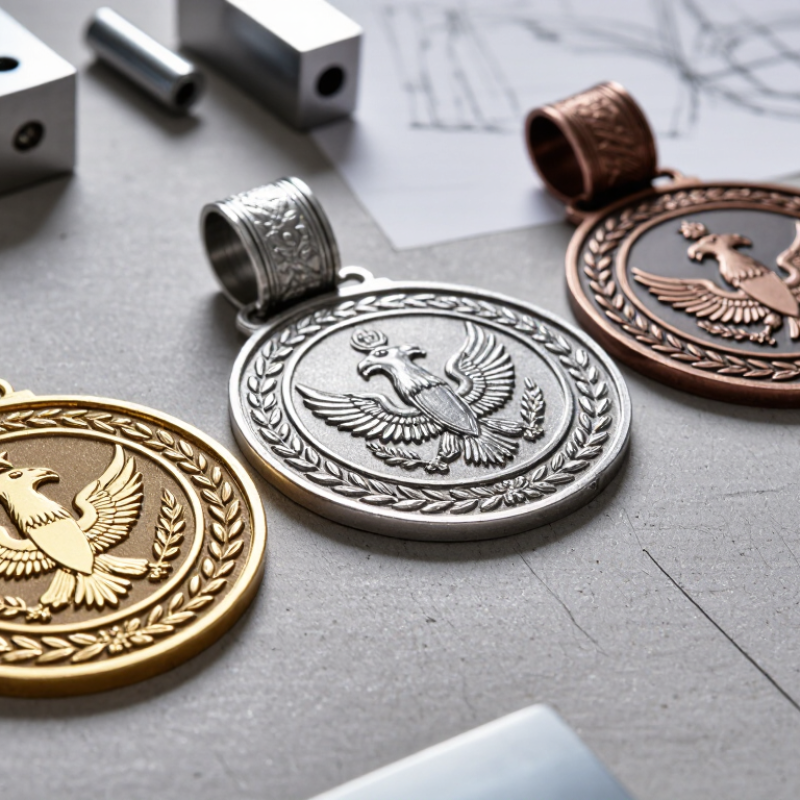
What Are 3D Metal Medals and How Are They Made?
A 3D metal medal uses raised relief, curved surfaces, and layered depth to make artwork feel tactile. It is not always 3D-printed. Many medals use computer-designed artwork, precision tooling, and die striking or casting. Zinc alloy, brass, iron, and stainless steel are common choices.
The process begins with a digital 3D model. Designers sculpt details such as facial lines, lettering, and recessed backgrounds. A steel die then transfers this relief onto a blank metal piece under controlled pressure. Casting suits thicker shapes and complex edges. Metal additive manufacturing can also build prototypes directly from powder, although production costs may remain higher.
Wohlers Report 2024 valued the global additive manufacturing industry at 20.035 billion dollars in 2023, after 13.5% growth. Grand View Research reported that the broader 3D printing market reached about 20.68 billion dollars in 2023. These figures show expanding technical capability, not automatic medal quality. Small lettering can still soften. Deep relief may create fragile edges. I have found that a clean digital model does not guarantee a clean finished surface. Plating, polishing, color filling, and quality inspection often decide whether the medal feels premium in hand.
3D metal medals use raised or sculpted relief to create depth and detail. Common production methods include die striking, casting, and metal additive manufacturing, followed by polishing, plating, coloring, and quality inspection.
The chart compares the approximate density of metals and alloys commonly used for medals. Higher density generally produces a heavier medal of the same size. Values are representative material properties and can vary by alloy composition.
A top 3D metal medal manufacturer should prove more than attractive computer renderings. Practical experience shows that production control matters most. The manufacturer should understand CAD preparation, metal powder behavior, layer resolution, and support removal. Small errors can distort a raised emblem or soften a thin edge. Details matter.
Material knowledge is another defining criterion. Reliable producers explain alloy options, weight differences, surface hardness, and plating results clearly. They should provide a physical prototype before full production. A useful sample reveals rough edges, uneven color, weak lettering, and uncomfortable thickness. Ask for inspection records. Also, confirm dimensional tolerances, color consistency, and packaging protection. These details show professional discipline, not marketing confidence.
Traceability strengthens authority and trust. A capable manufacturer can identify materials, production batches, inspection stages, and finishing processes. Clear communication matters when artwork changes late. The supplier should explain what can be improved and what cannot. No factory is perfect. I would still question any supplier promising flawless results without testing. A minor issue may appear only after polishing, especially around deep grooves or narrow cutouts. Independent quality checks can reduce this risk. Response times, sample revisions, and documented approvals also reveal real manufacturing experience.
Which Manufacturers Specialize in 3D Metal Medal Production?
Manufacturers specializing in 3D metal medals usually operate dedicated sculpting, casting, and finishing departments. They turn digital artwork into raised relief, recessed textures, and layered forms. Experienced teams inspect the design from several angles before making a prototype. This matters because thin edges can lose definition during casting. Small details matter.
The most capable producers offer custom 3D modeling rather than simple logo stamping. Their specialists adjust wall thickness, relief depth, and attachment points for better strength. They may work with zinc alloy, brass, bronze, aluminum, or stainless steel. Material selection depends on weight, color, budget, and intended use. A reliable manufacturer should provide samples, production drawings, and clear approval steps. Factory experience is useful, but it does not replace documented quality checks.
Look for manufacturers with controlled polishing, plating, enamel, and antique-finishing processes. Each stage can change the medal’s appearance. Skilled inspectors check surface pits, uneven plating, sharp edges, and alignment before packing. Some facilities also maintain material records and batch inspection reports. These details support consistent production across large orders. However, even a strong supplier may miss a minor texture flaw. Buyers should review prototypes carefully and request measurable tolerances. Photos can hide defects. Physical samples reveal them.
Specialists serving sports events, military commemorations, academic programs, and cultural organizations often understand strict presentation requirements. Ask how they protect fine relief during transport. Ask who approves color references. A clear answer is a useful sign.
Comparing 3D metal medal manufacturers requires more than examining polished product photos. The 2024 Wohlers Report valued the global additive manufacturing industry at about $20.04 billion in 2023. It also recorded 11.2% year-on-year growth. This expansion has increased supplier choices, but not consistent quality.
A capable manufacturer should explain its metal alloy, printing process, and inspection method clearly. ISO/ASTM 52900 provides common terminology for additive manufacturing processes. However, terminology alone proves little. Ask for material certificates, dimensional inspection records, and coating-thickness results. A medal should show sharp lettering, clean recessed areas, and smooth edges under close lighting. Small pits near the loop can reveal weak finishing control. I have seen attractive samples fail during repeated handling. That detail deserves attention.
Service separates strong manufacturers from merely adequate ones. Leading suppliers usually provide a digital proof, production timeline, and sample approval stage. Their responses should identify risks, not simply promise perfection. The 2024 State of 3D Printing report by a professional industry survey platform found that cost and production speed remain major adoption concerns. Those pressures can encourage rushed finishing or limited inspection. Therefore, compare corrective-action policies, packaging tests, and communication records. A supplier that reports a delay honestly may be more reliable than one offering an unrealistic delivery date. My own assessment would include one prototype, a color-match check, and a short handling test before approving a large order.
Choosing a 3D metal medal manufacturer requires more than comparing catalog photos. Experienced buyers should check metal composition, relief depth, edge sharpness, plating adhesion, and dimensional tolerance. Ask for evidence. Request material certificates, pre-production samples, and inspection records for every major order. ISO/ASTM 52900 provides common additive manufacturing terminology, helping buyers compare production claims more accurately. A supplier using vague terms such as “premium alloy” deserves closer questioning.
Capacity also matters. The Wohlers Report 2024 valued the global additive manufacturing industry at $20.035 billion in 2023, with 13.5% annual growth. This expansion does not prove every workshop has stable quality control. Buyers should examine equipment capability, batch tracking, operator experience, and finishing processes.
Ask whether the manufacturer can maintain consistent relief details across 500 or 5,000 pieces. A small test batch can reveal hidden problems, including uneven coloring, rough recessed areas, or weak attachment loops.
Cost should include tooling, sampling, plating, packaging, and rework. The cheapest quotation may exclude essential inspections. Compare lead times against actual production schedules, not optimistic promises. A useful supplier should explain design limitations before accepting payment.
My own scorecard would still be imperfect. A polished prototype can hide production variation. Therefore, approve a signed sample, define acceptable defects, and keep inspection photos with the purchase record. Details matter.
It uses raised relief, curved surfaces, and layered depth. Artwork should feel tactile when touched. Not always printed.
Common choices include zinc alloy, brass, iron, and stainless steel. Each affects weight, strength, detail, and surface finish. Material choice needs careful review.
Production often starts with a digital 3D model. A steel die transfers the relief onto metal under controlled pressure. Casting suits thicker shapes and complex edges. Metal additive manufacturing can build prototypes directly.
Designers should inspect facial lines, lettering, recessed backgrounds, and narrow edges. Small lettering may soften. Deep relief can create fragile edges. Tiny text is risky.
Inspect the medal under bright, close lighting. Look for sharp lettering, clean recessed areas, and smooth edges. Small pits near the loop may indicate weak finishing control. Photos are not enough.
Request material certificates and dimensional inspection records. Coating-thickness results can clarify finishing consistency. A clear digital proof should come before production. Details matter.
Compare their alloy information, production method, inspection process, and communication. Ask about sample approval and corrective-action policies. An honest delay may be safer than an unrealistic delivery promise.
Order one prototype first. Check color matching, surface smoothness, lettering, and loop strength. Try a short handling test. A clean digital model does not guarantee a clean finished surface. I would still test it.
3D Metal Medal designs combine sculpted depth, precise detailing, and durable metal construction to create awards with a premium, dimensional appearance. They are typically developed from a digital or handmade model, converted into a mold or 3D production file, cast or formed in metal, and then refined through polishing, plating, coloring, and quality inspection. A top 3d Metal Medal manufacturer should demonstrate strong design support, accurate production capabilities, reliable materials, consistent finishing, and effective communication throughout the project.
Leading manufacturers can differ in their expertise, customization options, minimum order requirements, production timelines, pricing, and after-sales service. Buyers should compare portfolios, sample quality, manufacturing processes, material choices, proofing procedures, packaging, and delivery terms before making a decision. The right supplier should understand the medal’s purpose, provide clear and practical recommendations, maintain dependable quality control, and deliver products that match the approved design, budget, and schedule.