
Military medals are more than polished metal on a ribbon. They preserve moments of courage, duty, loss, and professional achievement. Their colors, clasps, stars, and inscriptions can reveal where service occurred and why recognition was granted.
Medal historian Peter Duckers has observed, “A medal is never just a piece of metal; it is a record of service, sacrifice, and recognition.” That perspective helps explain why collectors and military historians study every detail. The ribbon may identify a campaign. A small bar may show repeated service. A wreath or sword may signal bravery, leadership, or operational distinction.
This guide explores the top types of Military Medal awards found across different national systems. Campaign medals recognize participation in named conflicts or operations. Service medals honor time spent in uniform or specific assignments. Gallantry medals recognize courage under dangerous conditions. Achievement medals highlight leadership, technical skill, or exceptional performance. Commemorative medals mark major anniversaries, royal events, or national milestones.
The categories can overlap. A medal may recognize service, but its design can also carry political and cultural meaning. That part is easy to miss. Names and standards differ between countries, branches, and historical periods. No single ranking fits every military tradition.
Reliable interpretation requires context. Official award regulations matter. So do service records, issue dates, and verified provenance. A bright surface does not prove importance. Sometimes, careful research changes the first impression. That is why this overview considers both appearance and purpose, helping readers understand what each Military Medal represents.
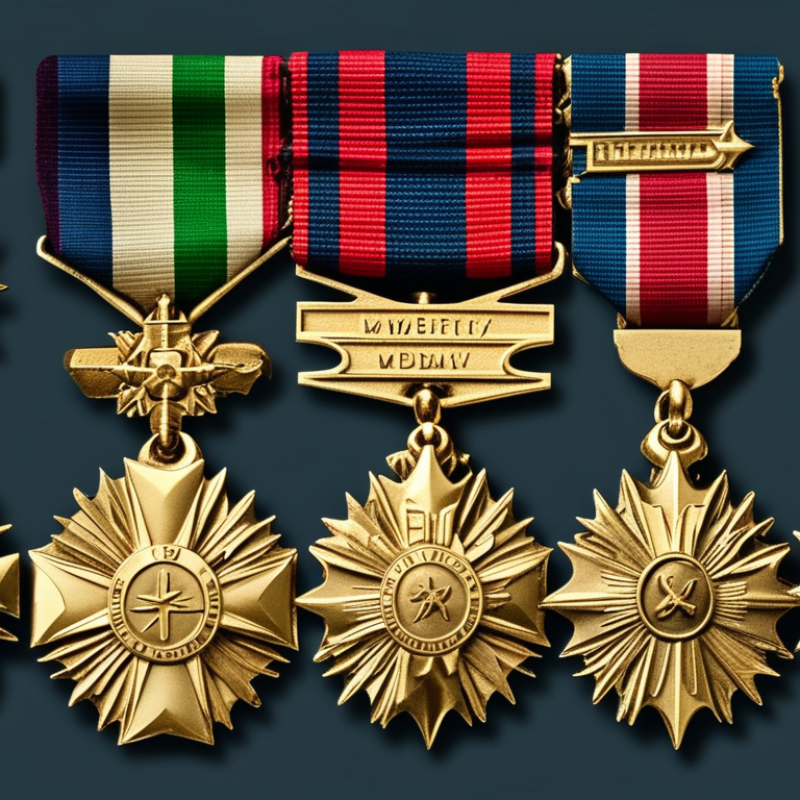
Military medals are formal decorations awarded to recognize service, conduct, achievement, or courage. They are more than polished metal worn on a uniform. Each medal records a specific relationship between a person, an action, and an authorized institution. Service medals may mark honorable participation during a defined period, while campaign medals identify duty in a particular operation or region.
Their purpose is both practical and symbolic. Clear eligibility rules help officials verify who served, where service occurred, and what standards were met. A bravery medal may require documented evidence, witness statements, and careful review by a designated board. A service medal usually reflects sustained duty rather than one dramatic moment. The distinction matters. Recognition should be accurate, not simply generous.
Medals also preserve institutional memory. A small ribbon on a chest can represent months of difficult training, long deployments, or a decision made under pressure. In my view, their strongest value is public accountability. An award should explain why it was granted, not create mystery around the recipient. The system is not flawless; records can be incomplete, and personal experiences may be hard to measure. Still, transparent criteria and reliable documentation make military honors more credible. A medal cannot tell the whole story. It can offer a carefully verified part of it.
| Military Medal or Decoration | Recognition Level | Eligible Recipients | Primary Purpose | Typical Qualifying Achievement |
|---|---|---|---|---|
| Medal of Honor | Highest U.S. military award | Members of the U.S. military | Recognizes extraordinary heroism and conspicuous gallantry above and beyond the call of duty. | Acts of valor involving exceptionally great personal risk and selfless conduct during military operations. |
| Distinguished Service Cross | Second-highest Army award for valor | U.S. Army personnel and other eligible service members serving with the Army | Recognizes extraordinary heroism in combat that does not meet the requirements for the Medal of Honor. | Extreme gallantry in action against an enemy of the United States. |
| Navy Cross | Second-highest Navy and Marine Corps award for valor | Members of the Navy, Marine Corps, and other eligible personnel | Recognizes extraordinary heroism in combat under exceptionally difficult or dangerous conditions. | Heroic action involving significant risk of life and conduct substantially above the standard expected of the recipient. |
| Air Force Cross | Second-highest Air Force award for valor | Members of the Air Force and other eligible personnel serving with the Air Force | Recognizes extraordinary heroism in military operations against an opposing armed force. | Conspicuous gallantry that does not qualify for the Medal of Honor. |
| Silver Star | Major award for combat valor | Members of all U.S. military services and eligible allied personnel | Recognizes gallantry in action against an enemy of the United States. | Marked bravery and devotion to duty that are clearly above what is normally required. |
| Bronze Star Medal | Combat valor or meritorious service award | Members of the U.S. military and eligible allied personnel | Recognizes heroic or meritorious achievement or service in connection with military operations against an opposing armed force. | Combat heroism may be indicated by the “V” device; the medal may also recognize sustained meritorious service. |
| Purple Heart | Casualty and combat-wound decoration | Members of the U.S. military who are wounded, killed, or die as a result of enemy action | Recognizes personal sacrifice resulting from wounds or death caused by an enemy or hostile force. | Qualifying wounds or fatalities received during military service, subject to official eligibility rules. |
| Meritorious Service Medal | Senior meritorious-service award | Members of the U.S. military and eligible allied personnel | Recognizes outstanding meritorious achievement or service in a position of significant responsibility. | Exceptional performance over a sustained period, generally outside direct combat valor criteria. |
| Defense Meritorious Service Medal | Joint-service meritorious award | Members serving in joint or defense-level assignments | Recognizes outstanding non-combat meritorious achievement or service in a joint defense environment. | Performance that contributes significantly to joint missions, policy, operations, or defense administration. |
| Armed Forces Expeditionary Medal | Expeditionary service medal | Eligible members of the U.S. military | Recognizes participation in a designated significant military operation or armed conflict. | Qualifying service in an approved area of operations during the specified period and conditions. |
| National Defense Service Medal | National-defense service medal | Eligible members of the U.S. military | Recognizes honorable active service during designated periods of national emergency or armed conflict. | Completion of qualifying active service during an authorized eligibility period, without requiring combat participation. |
| Humanitarian Service Medal | Humanitarian operations medal | Eligible members of the U.S. military | Recognizes direct participation in significant humanitarian operations. | Service supporting disaster relief, evacuation, medical assistance, or other approved humanitarian missions. |
A military medal is an official decoration recognizing service, conduct, achievement, or courage. It connects a person, an action, and an authorized institution.
A service medal usually records qualifying duty during a specific period. A valor medal recognizes courage during serious and immediate danger.
No. Campaign medals generally confirm participation in an approved operation, conflict, or region. They show qualifying duty, not necessarily extraordinary bravery.
A useful citation may identify the date, location, unit, assignment, and specific action. It should explain why the decoration was granted.
Reviewers may examine official records, witness statements, documented risks, and the recipient’s decisions. The process should compare evidence with published criteria.
Common categories include distinguished service, achievement, lifesaving, campaign, service completion, and unit awards. Unit awards recognize collective performance.
Records help verify dates, assignments, orders, and eligibility. Without them, dramatic stories can replace facts. That creates confusion.
No. A medal records one carefully verified part of a person’s experience. It may not show fear, teamwork, trauma, or overlooked acts of courage.
Terms vary between countries, military branches, and historical periods. Some awards combine service, achievement, and campaign elements. The boundaries are not always neat.
Read the full citation, then check the date, location, unit, and stated action. Compare the story with official criteria. Some details may still remain uncertain.
Military medals are official symbols of recognition presented to members of the armed forces for service, achievement, courage, or participation in important missions. A Military Medal can honor a wide range of contributions, from exceptional bravery under dangerous conditions to faithful service over a specific period. These awards help preserve institutional memory, recognize personal sacrifice, and communicate the values an organization seeks to encourage.
The main categories include medals for valor and heroic actions, service and long-term commitment, campaigns, operations, and special achievements. Valor medals generally recognize acts of courage that exceed normal expectations, while service and campaign medals acknowledge sustained duty or participation in designated missions. Awards are usually granted through a formal review process based on documented performance, recommendations, and established eligibility rules. Their order of precedence and ranking may depend on the seriousness of the achievement, the type of service, and the regulations governing the awarding organization.
